
Do you remember walking into your friend’s living room and feeling an immediate sense of calm, as if the room itself took a big sigh for you?
This is the power of minimalistic styles such as Japandi and Scandinavian designs. Both styles are very much in trend now, and they both offer a sense of calmness and cleanliness in their own ways, but they couldn’t be more different.
Let’s learn about both!
What Is Scandinavian Style?
Scandinavian design originated from Scandinavian nations such as Sweden, Denmark, and Norway. This type of design is characterized by light-filled open areas, minimalistic décor, and simple yet functional furniture. White walls and ceilings, light-colored wood flooring, comfortable textiles, and minimalist décor are typical features of this style.
Pastel colors such as soft blue, green, and gray combined with black are commonly seen in Scandi décor. The aim of this décor is to create spaciousness in small spaces and warmth during long winter months.
What Is Japandi Style?
Japandi style is a fusion of two words; “Japan” and “Scandi.” This style combines the minimalistic beauty of Japanese design with the practicality of Scandinavian design. Japandi style design features a sense of simplicity, calmness, elegance, and elegance of minimalism.
The colors used in Japandi design are warm colors like creams, earth browns, and even soft beiges, as opposed to the highly vibrant whites found in Scandinavian interiors. Pieces of furniture in Japandi designs are sleek and have well-defined lines.
The Main Differences
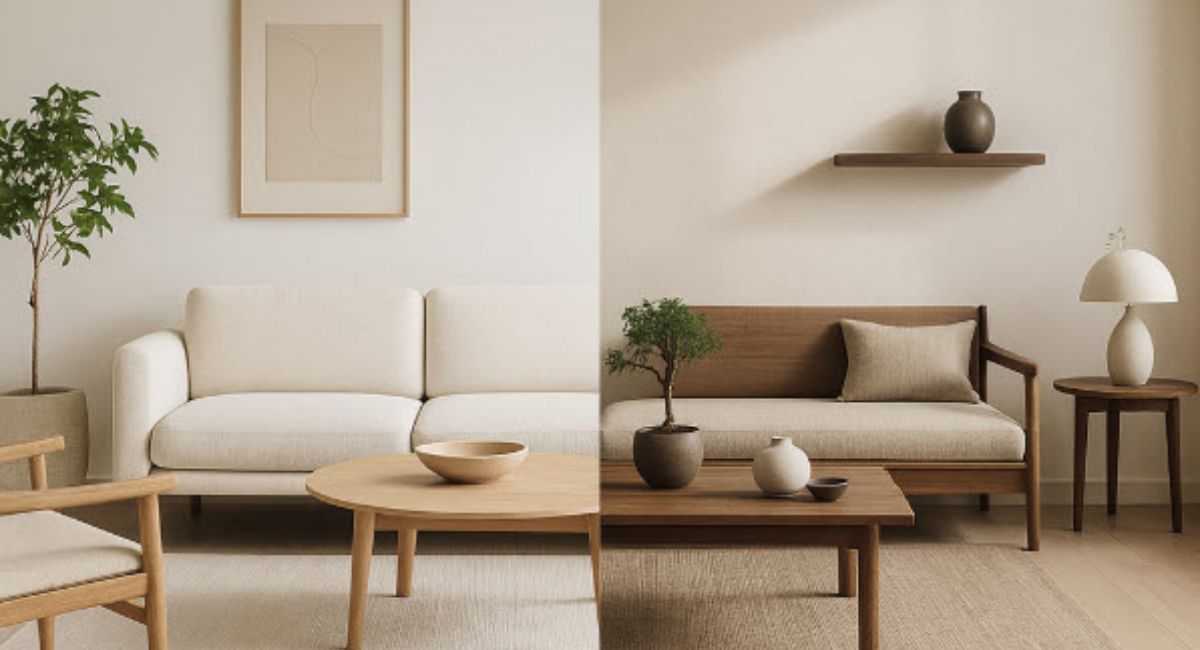
The most obvious contrast is the overall atmosphere that these two designs create. While Scandinavian design is all about being light, airy, and spacious, Japandi seems to be warmer, more soothing, and cozy. Scandinavian designs make use of light hues and natural light, whereas Japandi employs earth tones and contrasting colors. Both designs emphasize simplicity, yet Japandi seems more purposeful and calm.
| Feature | Scandinavian | Japandi |
| Color feel | Light, white, cool, airy | Warm, neutral, earthy |
| Mood | Fresh, bright, cozy | Calm, grounded, Zen-like |
| Materials | Light woods, wool, simple textures | Darker woods, bamboo, linen, ceramics |
| Best for | Bright, open, easygoing homes | Peaceful, curated, minimal homes |
How They Feel in Everyday Life
The Scandinavian space feels refreshing and lively. It is ideal if you enjoy having an open and bright space, many windows, and a welcoming atmosphere. The idea behind it is that comfort and practicality prevail, meaning it is forgiving in terms of functionality, which makes it great for a busy household.
As far as Japandi goes, it can be described as peaceful. If you value a slow pace and simplicity in your life, if you are trying to have less material items and spend your mornings in peace and calmness, then Japandi will suit you perfectly.
Color Palettes and Materials
The Scandinavian approach to interiors emphasizes light, cool colors. Light-colored walls, light wood (pine or birch), pastel colors, and white fabrics provide a light base. For contrast, black elements and patterns can be included, providing a modern touch to the design.
However, Japandi style brings in warmth. Cream-colored walls, dark wood (walnut, oak), bamboo, rattan, undyed linen, and stones are used. The color palette features earthy colors such as beige, grey, brown, and green shades that merge into each other.
Furniture and Layout
Although both design styles appreciate minimalistic designs and functional items, Japandi style furniture usually looks lower to the ground, which makes everything look more balanced and calm. For example, chairs and tables can be closer to the floor, which contributes to the calm, meditative position that should be adopted.
Scandinavian design style is rather functional and adaptive. It uses furniture that looks comfortable and is used on a daily basis, including multifunctional sofas and dining tables. The room will be organized depending on natural light.
Which Fits Your Home Better?
Select Scandinavian if you have a bright house, or if you wish an airy, clean and easily-managed place to live. It will also suit a family that prefers comfort without darkness and formality in their homes.
If you are looking for a calming escape with sophistication and earthiness, then Japandi style is the way to go. It suits those who prefer natural materials and muted colors. For many American homes, Japandi may be more timeless since it is a combination of minimalism and warmth.
How To Style It
If you lean towards Scandinavian interior design, begin with a white or soft gray color palette. You can also have a combination of light wood furniture and natural textiles made out of materials such as wool and cotton. Your room should look simple but you can have some touches of black colors for your interiors.
Japandi will require you to choose a color palette that includes creams, beiges, taupe, or muted browns. Your furniture will include wood, stone, linen, and ceramics. It should also be minimalistic but elegant and simple.
Final Thought
They are both beautiful, yet cater to different purposes. The style known as Scandinavian suits those looking for lightness, simplicity, and a sense of freshness, while Japandi caters to those desiring calmness, coziness, and relaxation. In case your room is dull or cluttered, going Scandinavian could solve the problem; in case it is noisy or decorated to excess, then Japandi would be a good choice.
FAQs
1. Is Japandi more expensive than Scandinavian?
Depending on your personal preferences, it may be more expensive due to the selection of darker wood or other furniture items. However, both styles are based on the quality of items rather than the number of them.
2. Can I combine these two designs together?
Certainly, as the principles of Scandinavian and Japandi styles are alike. Most often, people add Japandi elements into their Scandinavian houses to add warmth.
3. Will Scandinavian fit better in a small flat?
Usually, yes, as the color palette of the former is much lighter and allows opening the space up. Yet, Japandi will also be suitable if the layout remains straightforward and clear.
4. How easy it will be to keep the room tidy in these styles?
Scandinavian interior will look brighter and cozy all the time. Japandi is equally practical but requires keeping the house clutter-free.
5. What distinguishes Japandi from minimalist style?
Japandi brings warmth and nature into the design. While minimalist style is harsh and stark, Japandi gives it human touch.