



During the winter months, your heating system could be under a lot of strain and a little preparation could save you a whole lot of trouble, including having to replace faulty systems, higher energy costs, and even costly repairs.
This blog post will go through how to prep your heating system for winter and increase its efficiency.
Why winter prep matters
The heating system is working at its best when the weather is cold, which means that now is the best time to check that your system is clean and working as intended. Not only will it provide better heating efficiency, but it will avoid any potential malfunctions in the future and eliminate the risks of safety problems like poor ventilation and carbon monoxide build-up.
As per the recommendations from the U.S. Department of Energy, you can increase the efficiency of your home by taking simple measures such as insulating your house and avoiding air leaks.
1. Replace the air filter
When the filter is clogged, air flow is reduced, and your heater or heat pump will have to work more than needed. Changing the filter prior to winter is one of the simplest ways to keep your system working efficiently. Also, changing the filter will improve your home’s air quality and ease the burden on your heating equipment.
2. Test the system early
Ensure that your heater works by turning it on prior to the onset of the first cold spell in order to ensure that it ignites and heats up effectively without producing any abnormal sounds or odors. Early testing will allow ample time for rectification in case there is a problem that requires solving before using the device daily.
3. Clear vents and outdoor units
Ensure that the supply and return air vents are free from obstruction by furniture, carpets, and draperies. In case you have an outdoor heat pump or HVAC unit, remove any leaves, dust, and debris from around it to allow proper airflow. Never cover a heat pump that will still be in use during the winter season. This ensures optimal performance and avoids unnecessary wear and tear.
4. Check the thermostat
The thermostat regulates the frequency at which the heating system is utilized, hence making it necessary to consider before the cold season arrives. In case your home uses a programmable or smart thermostat, you should adjust it to maintain low temperatures when you are sleeping or absent from home. Smart thermostats from ENERGY STAR can be used to cut down on energy bills.
5. Seal drafts and improve insulation
The most effective heating system will have difficulty maintaining heat if there is leakage from gaps near windows, doors, and even attics. You should look out for drafts in these areas and seal any gaps using weather stripping and caulking. It has been suggested by the U.S. Department of Energy that you should seal gaps and insulate important areas.
6. Inspect safety devices
Before the arrival of winter, check your smoke alarms and carbon monoxide alarms. This is even more important if you have fuel burning devices, a fireplace, or a wood stove. According to the Centers for Disease Control and Prevention, there should be at least one battery-operated carbon monoxide alarm near the heating zone and that all fuel burning devices must vent to the exterior.
7. Schedule a professional tune-up
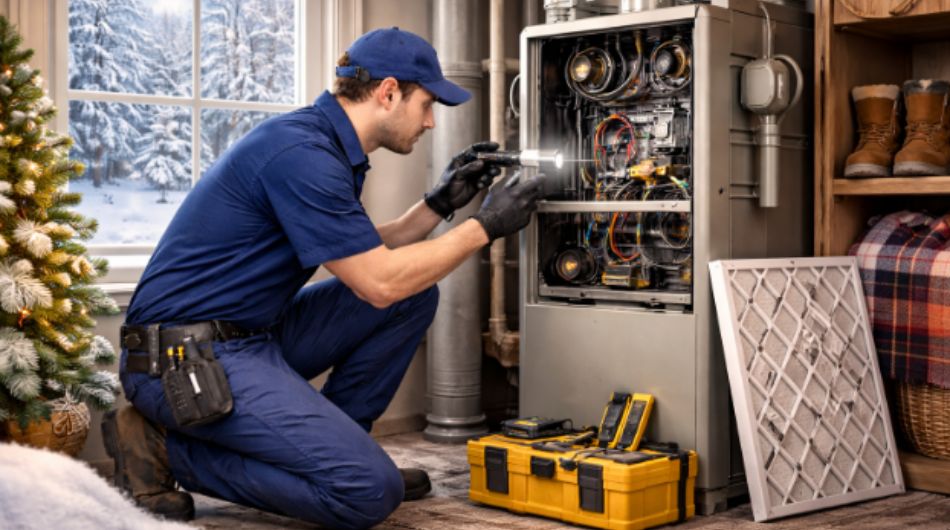
An HVAC tune-up by professionals will detect any minor issues that could lead to costly repairs later on. In an HVAC maintenance check-up, an expert will look at the wiring, clean components, check air flow, and make sure everything is running safely. Most winter maintenance lists put tune-ups as one of the top priorities. This is definitely one of the best things to do for winter preparation.
Final Thoughts: Stay Warm, Stay Ready
We appreciate the pressure you may be under when your heating unit breaks down during the harsh winter season, and we also realize that what most clients require is comfort and warmth in their homes without having any worries. This is precisely why we advise you to have your heating unit checked before it gets too cold outside.