





Ever looked into your kitchen sink cabinet only to be met by a puddle looking back at you?
It’s quite an unsettling experience. You’re in the middle of cooking up something delicious when all of a sudden, you’ve got water pouring from a leaky faucet, draining poorly down the clogged drain, or pooling underneath the entire sink itself! When it comes to kitchen plumbing problems, the potential for costly damage shouldn’t be underestimated.
Rest assured, however, most kitchen plumbing issues can easily be taken care of without requiring professional plumbers. By following some simple tips and tricks, you should be able to solve the vast majority of problems with ease.
In this blog post, we’ll outline the seven most common kitchen plumbing issues that you’re likely to encounter and discuss how you can fix them yourself.
🚰 Low Water Pressure at the Sink: Is Your Faucet Sputtering?
Having a trickle of water when you open the tap in the kitchen is annoying because you will find it difficult to wash the dishes or fill a cooking pan. However, having low water pressure does not pose a huge problem because it is caused by blockage in the aerator.
The water contains a lot of minerals such as lime and calcium as it moves through the pipes. Over time, the minerals collect in the aerator, which is the little mesh found in the faucet tip, hence causing water pressure problems. All you have to do is unscrew and clean the aerator.
Easy Fix:
- Unscrew the aerator from the faucet tip
- Soak in white vinegar for a few hours to remove mineral deposits
- Brush using an old toothbrush
- Wash with clear water and reattach the aerator
This simple maintenance task takes less than 15 minutes and can restore your water pressure immediately.
💧 Leaky Faucet: That Annoying Drip Won’t Stop
It isn’t only annoying; it also causes unnecessary water loss, resulting in an increased utility bill. A simple drop from a faucet can cause more than 3,000 gallons to be wasted every year. Thankfully, almost all of the leakage from faucets is caused by the wear of internal components that are simple to change.
Firstly, determine which kind of faucet it is. There are four types, namely compression, ball type, cartridge, or ceramic disk.
Easy Fixes by Faucet Type:
Steps to Fix:
- Close the water supply valve under the sink
- Remove the handle by loosening the cover
- Install a replacement identical to the damaged part
- Reassemble in the opposite sequence
Take the old components with you when shopping at the hardware store for a precise fit. The DIY repair will cost $10-$30 compared to $150-$300 for a specialist’s visit.
🚽 Clogged Kitchen Sink: When Water Won’t Drain
Sinks with poor draining and those that are totally clogged are some of the plumbing issues that are commonly encountered. Over a period of time, food, grease, soap, and coffee grinds accumulate, resulting in clogs.
The kitchen sink is fitted with a P-trap whose purpose is to stop the entry of sewer gases, but at the same time, it catches dirt and grime which ends up clogging the pipes.
Simple Solutions (Tried in Order):
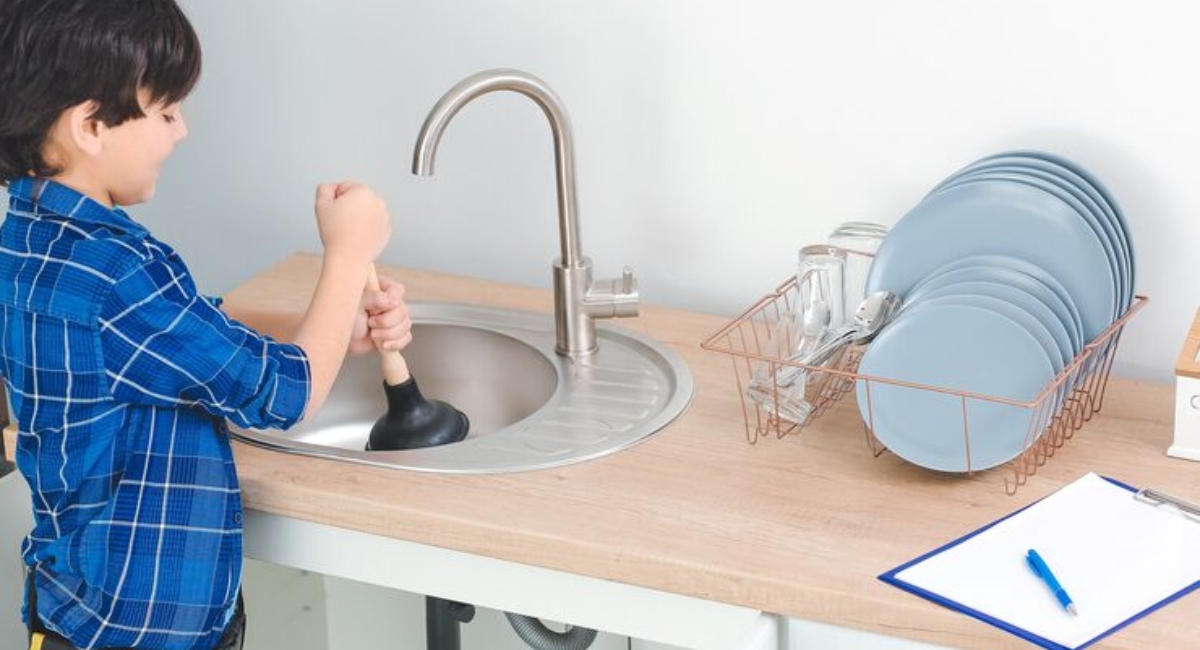
- Plunger First: First, Plunge the Drain to create vacuum and unclog it
- Baking Soda + Vinegar: Mixing Baking Soda and Vinegar: Pour in 1 cup baking soda, followed by 2 cups vinegar down the drain. Allow it to fizz for 30 minutes before rinsing it with hot water
- Drain Snake: This physically removes the obstruction in case previous remedies fail
- P-Trap Cleaning: Place a bucket beneath the sink, loosen the slip nuts using pliers and clean the trap
Important: Chemical drain cleaners should never be used since they cause corrosion.
Boiling water should regularly be flushed through drains.
🔧 Garbage Disposal Jam: When Your Unit Won’t Run
Garbage disposals are incredibly efficient machines but aren’t meant to handle grease, bones, vegetable peels like potato skins, and fibrous vegetables. Even small amounts of such items can result in motor jams or foul odors.
Quick Solutions:
Press the Reset Button: Found on most models at the base of the unit—it works wonders.
Manually Unclog Disposal: Turn off the machine, put an Allen wrench into the hole on the bottom, turn the motor shaft.
Clean the Machine: Simply grind up ice and citrus peels in the disposal to clean and freshen the unit.
Run Cold Water: Always use cold water before and after running the garbage disposal.
Do not use any sort of chemical drain cleaner on your disposal—the chemicals damage the disposal.
🍽️ Dishwasher Leaks: Water Where It Shouldn’t Be
Leaking dishwashers can ruin cabinets and floors if left unresolved. There are some typical sources of leaks which you can address yourself before contacting a plumber.
Common Leak Sources:
Maintain the dishwasher filter regularly and look out for leaks in the water hose.
🔥 Not Enough Hot Water: Cold Dishes Are No Fun
Should there be any issues where hot water is not produced while using your dishwasher or doing any hand washing, then the problem could lie within your water heater. Installing more water-consuming devices will call for an upgrade in the size of your water heater.
Common Issues:
Gas Water Heater: Pilot Light failure, Thermocouple malfunction or Valve failure
Busted Dip Tube: It is responsible for delivering cold water to the bottom of your water heater
Under-sized Water Heater: It means your water heater is too small for your family’s requirements
Replace water filters twice a year if you own an ice-maker from your fridge.
🛡️ Prevention: Keep Kitchen Plumbing Problems Away
Proper maintenance keeps most kitchen plumbing problems at bay. Here’s what you need to do as a habit:
Daily/Weekly Practices:
- Install a sink strainer to collect food waste
- Avoid dumping grease down the drain since it solidifies and causes clogs
- Rinse sinks with hot water once a week
Monthly Maintenance Work:
- Use baking soda and vinegar to clean drains
- Clean the faucet aerator from mineral deposits
- Clean the garbage disposal with ice and citrus
- Clean the dishwasher filter and check spray arms
When Small Issues Become Big Problems:
Address leaks immediately. A small drip today can cause water damage tomorrow.
🚨 When to Call a Professional Plumber
Not all plumbing issues can be solved without professional assistance. You should consult an expert immediately if you find any of the following:
- Recurring issues despite several attempts to solve the issue
- Damage caused by water leaks in the cabinetry, flooring, or wall areas
- Noises coming from pipes and fittings
- Smelly drains due to sewer odor
- Installation of new equipment and pipelines
- Corrosion in the plumbing system
Final Thought
Kitchen plumbing issues are sure to arise at some point, but they don’t need to ruin your day or your wallet. Simple solutions like clearing out clogs, fixing dripping faucets, adjusting water pressure, and unclogging the garbage disposal exist for these most common problems, saving you both money and effort.
It all boils down to taking action immediately when any issues arise in your kitchen plumbing system and ensuring that your kitchen plumbing system is maintained regularly. You will save yourself a great deal of both time and cost in the long run through this preventive maintenance.
Begin by making some simple fixes right away. Stock up on baking soda and vinegar for your sinks. Change your aerator once a month. Don’t flush anything except water down your drains. It’s the little things that keep your kitchen plumbing system flowing efficiently.
FAQs
1. What is the fastest way to clear a kitchen drain?
Begin with a plunger to generate a vacuum. Then pour a cup of baking soda into the drain, followed by two cups of vinegar, wait 30 minutes, and wash the drain out with hot water. The natural method breaks down clogs without harming the pipes.
2. How often should I clean the faucet aerator?
Clean the faucet aerator once a month to ensure proper water flow and no mineral buildup. For users of hard water, clean the aerators twice monthly.
3. Why does my garbage disposal stink?
Odor in your disposal unit comes from food and grease stuck in the unit. Clean your disposal monthly using ice cubes and citrus peels and washing it with baking soda and vinegar before flushing it with hot water.
4. Can I use chemical drain cleaners on my kitchen drains?
Avoid chemical drain cleaners at all cost since they could harm your pipes, the garbage disposal, and dishwasher parts. They are also hazardous to pipes made of plastic or metal and more than ten years old.
5. What is the amount of wasted water from a leaking tap?
A tap that is leaking one drop per second will waste about 3,600 gallons of water per year. The cost incurred due to this will be about $20 per month.