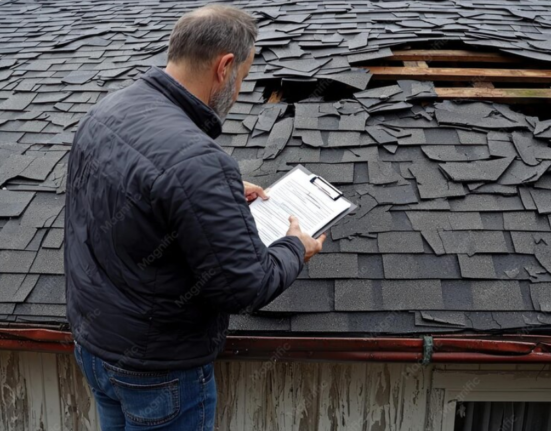






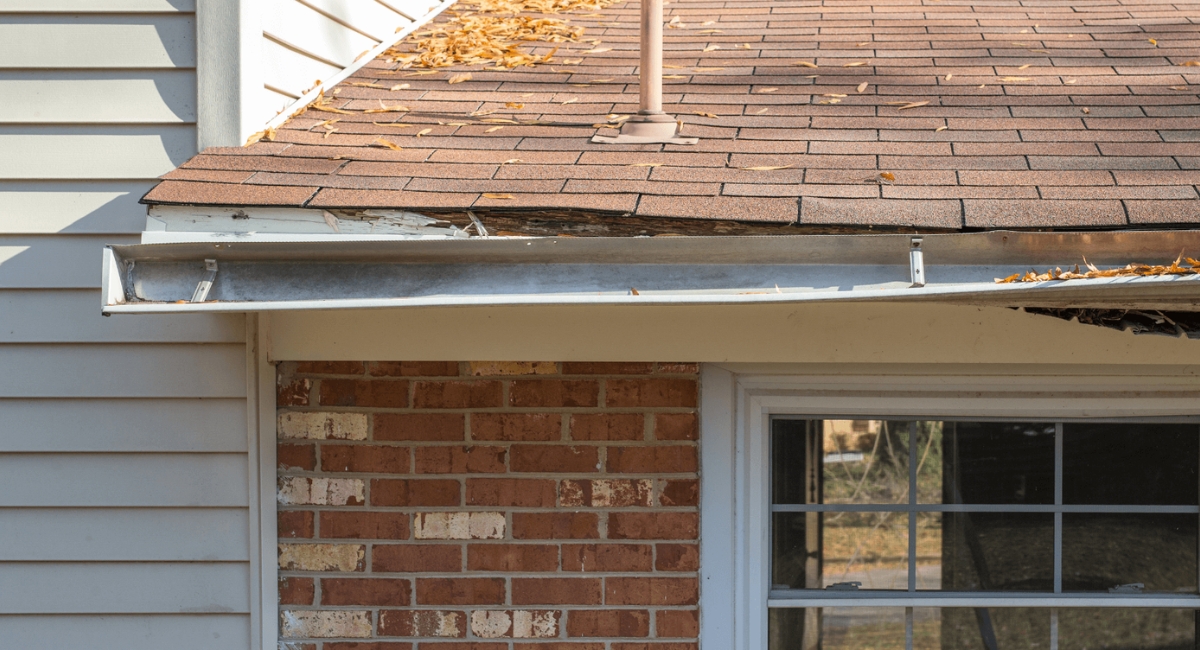
Ever wondered why your roof is leaking even when the shingles seem fine?
The actual problem might be hiding right at the edge of your roof, slowly causing damage year after year. Most homeowners check their shingles carefully, but they often overlook the gutters. Gutters are a really important part of your roof, and if they’re not working correctly, they can quietly damage your roof starting from the edges.
The Hidden Danger L Above Your Head
Your gutters have one job, and one job only, to move water away from your roof and foundation. If they fail, water doesn’t just spill over the side. It backs up on your roof, seeps under shingles and begins a slow destruction process that can cost thousands to repair. The kicker? Usually you don’t see the damage until it is severe.
Clogged Gutters: The Silent Roof Killer
Gutters tend to fill with leaves, twigs and other debris, especially in the fall. Clogged gutters leave rainwater nowhere to go. It backs up onto the roof deck and leaks under shingles, damaging the underlay and roof decking. This water intrusion leads to wood rot and structural deterioration that can compromise the entire edge of your roofing system.
The damage occurs slowly. One storm might not be a big deal, but months of overflow leave a constant moisture that rots wood from the inside out. By the time stains appear on the ceiling inside, the roof deck may already be compromised.
Ice Dams: Winter’s Hidden Threat
In colder climates like the USA, clogged gutters create ice dams that trap melting snow on your roof. If water cannot drain properly, it will freeze at the edge of the roof. This ice prevents subsequent melting snow from draining, forcing water under shingles and significantly raising the risk of leaks. Ice dams also damage insulation and may lead interior water damage throughout your entire home.
Through the winter the cycle repeats. Snow melts, water supports up, freezes, expands and pushes under shingles. Each cycle breaks down your roof’s protective barrier.
Overflow Water and Roof Leaks
If your gutter is blocked, the water can’t get through and it runs over the edges. Excess water overflows and seeps under shingles as well as damages the fascia the surface of where gutters are attached. When drainage is poor, water pools around your foundation and splashes back onto the siding, causing structural and cosmetic problems that can affect the edges of your roof.
The persistent dampness at the edge of your roof speeds up the decay of shingles. Chronic gutter problems can lead to failure of materials that ought to endure 20-30 years in as few as 10-15 years.
Improper Installation: A Foundation for Disaster
Improperly installed gutters can cause water to share in certain areas. The combination damages shingles as well as underlayment and can lead to leaks over time. New gutters can still damage your roofing system if they aren’t sloped properly for drainage. “Water should flow to the downspouts and not pool anywhere.
Most common installation errors include gutters that are too level, downspouts that are too few or improper attachment which results in gaps where water escapes onto your roof.
Lack of Maintenance: The Slow-Motion Crisis
Maintenance is important if one wants their gutters to work effectively. As time goes by, wear and tear causes the gutters to sag, develop holes, or become detached from the roof leading to roof damage. Rusting, cracking, and loose fixtures cannot be noticed until there is an issue.
It is recommended that gutter cleaning be done twice per year in spring and fall seasons. In cases where the house is surrounded by lots of trees, cleaning should be done frequently.
Signs Your Gutters Are Hurting Your Roof
The following are some indicators that should be on the lookout for:
- Water damage in the interior ceiling or walls around the edges of the roof
- Flaking paint on fascia boards or siding around the gutters
- Gutters sagging off the roof
- Gutters with plant and grass growth in them (due to excessive moisture)
- Curling and rapid deterioration of shingles along the edges of the roof
- Pooling of water next to your home’s foundation after rainfall
Protecting Your Roof: Simple Prevention Steps
Keep clean: Clean out your gutters every three months to ensure water can flow properly. You may do this using a hose, brush, or gutter scoop; never use sharp objects or high-pressure hoses that might damage your gutters.
Use gutter guards: In order to keep anything from getting into your gutters, consider using gutter guards.
Keep downspouts clear: Make sure that the downspouts are clear and that any extensions are pointing away from your building by at least 3-5 feet.
Make sure of proper slope: After you’ve cleaned out your gutters, make sure that water runs smoothly to your downspouts.
Get inspections: Schedule an inspection for your gutters every year, preferably before the winter season.
The Real Cost of Ignoring Gutter Problems
The removal of leaves in gutters for only $200 could save up to $5,000 when it comes to roof repair costs. For instance, if there is wood rot in your roof deck, it means that you will be forced to replace parts of the decking along with some shingles. Damage due to ice dams might even entail the installation of new insulation and drywalling inside your walls.
Many American property owners need to fix their roofs annually without considering that these could have been easily avoided through routine gutter inspection and cleaning.
Final Thought
Your gutters work tirelessly behind the scenes on your behalf but cannot fend for themselves. Routine cleaning, prompt repairs, and proper installation are the cornerstones of roof durability. Do not let leakages begin at the point when they have become too much; it is always advisable to prevent such things from occurring at all. In this respect, investing in gutters will be one of your wisest decisions.
FAQs
1. How frequently should I clean my gutters to safeguard my roof?
The gutter should be cleaned twice a year. If there are too many hanging trees nearby, you might consider cleaning it every four months or even more often. It will protect your roof from the formation of debris that will stop water from flowing away.
2. Can my clogged gutters cause roof leaks?
It is one of the main reasons why your roof develops leaks because due to clogs, the flow of rainwater stops, and it gets onto your roof where it penetrates the underlayment and the roof itself causing severe leaks.
3. What are some of the symptoms showing that my gutters affect my roof negatively?
Water stains on ceilings, especially near the edge of the roof; peeling paint on the fascia board; sagging gutters; curled shingles at the edges; and plants growing in your gutters are the main symptoms to watch out for.
4. What is the cost comparison between gutter maintenance and roof repairs?
Routine gutter cleaning costs $150-$250 two times per year. Repairs for gutters run in the range of $200-$500. Roof deck repair due to water damage runs at $3,000-$10,000, while a complete roof replacement will range anywhere from $8,000-$20,000.
5. Do I need to invest in installing gutter guards to protect my roof?
Yes, gutter guards minimize debris buildup and the number of visits for cleaning your gutters. But you also have to check and clean your gutter guards each year to make sure everything works properly.