




Ever seen a slope garden gradually eroding due to the rains?
This could well be the first time you realize you need a retaining wall. The retaining wall is not just any part of your garden landscaping; it helps to stabilize soil, control water, and even create an outdoor living area.
In today’s blog, we shall explore when it becomes mandatory to construct a retaining wall, factors affecting the price, and how you can plan for this without feeling lost in the process.
What Is a Retaining Wall?
Retaining walls are robust constructions that prevent soil from eroding on sloping terrain or uneven surfaces. They ensure stability in your yard and are commonly utilized in garden areas, driveways, patios, and hilly properties.
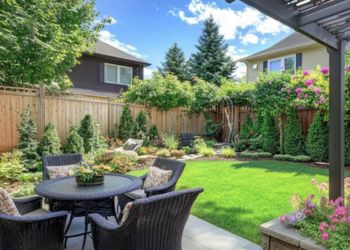
In addition, they can improve the aesthetics of your property and make it more functional. For instance, a hilly backyard can be flattened into a level surface for recreational activities such as sitting or gardening.
When Do You Need One?
The presence of a slope on your property that causes soil movement or water retention can be an indication that you require a retaining wall. This is also helpful if you need to make the yard flat for any landscaping work.
Some indications are as follows:
- Movement of soil downward during rains.
- Formation of cracks or dips in the ground.
- Collection of water in one particular area.
- The yard being too steep for practical purposes.
- Requirement of making flat areas in a sloping landscape.
In case the land continues moving, then a retaining wall is required to preserve the landscape and other surrounding structures.
Types of Retaining Walls
Different types of walls serve different purposes and cost differently. The selection of which wall is the most appropriate depends on factors such as the terrain of one’s yard, soil composition, and aesthetic preferences.
- Concrete walls are durable and have a higher load-bearing capacity.
- Stone walls are aesthetically pleasing, but costly.
- Wooden walls are inexpensive but less durable compared to concrete walls.
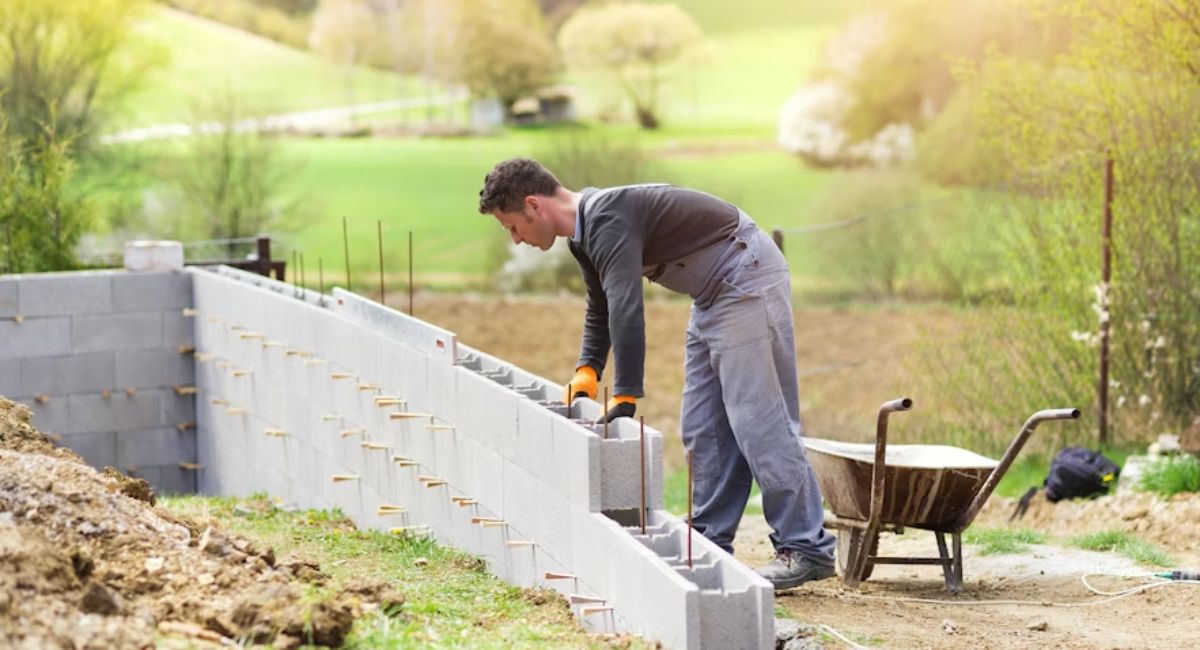
Block walls are popular because of their durability and variety of designs.
How Much It Costs
Retaining walls come with varying price levels. The cheaper versions would be those with simpler structures, whereas those with more complex designs and larger sizes will be more expensive. According to the latest cost guide, the average national price is somewhere in the $6,300 mark, while most fall somewhere between $3,500 and $9,400; although the cheapest prices start around $1,200 and can go much higher.
Another source suggests that installation costs could be anywhere between $35.41 and $48.62 per square foot for moderate levels of service, while others claim the cost per square footage to be anywhere between $20 and $50 per square foot.
What Affects the Price?
There are many factors that affect the end price of your retaining wall.
- Size of the wall: Larger walls are more expensive than smaller walls.
- Type of material: Stones and concrete are more expensive than wood.
- Site conditions: Difficult soil conditions will increase the price because it is more labor-intensive.
- Need for drainage: Additional drainage work may be required to avoid any damages in the future.
- Labor costs: Professional services will make the retaining wall costlier but will offer better quality.
A retaining wall on an easy terrain will be cheaper than one installed on difficult terrain.
DIY or Professional Help?
There are instances where a few small retaining walls can be built as DIY projects, which would be cost effective initially, particularly when the retaining wall is intended to support light loads. However, the height, load capacity, and drainage system are a few considerations that might warrant hiring professionals in this aspect.
This is due to the fact that a retaining wall built incorrectly will end up leaning or failing eventually.
Smart Planning Tips
Before beginning, it is useful to consider the entire project, not merely the wall alone. Investigate the grade of your yard, drainage, and soil composition. Moreover, request a definite quote including material costs, labor costs, and any additional expenses.
There are several measures that will ensure savings in the long run:
- Obtain multiple estimates.
- Select materials appropriate to your budget and environment.
- Consider drainage during construction.
- Construct the wall at the proper elevation and thickness.
Final Thought
In order to have an aesthetically pleasing yard, you will need to install the appropriate retaining wall. This will solve many of your yard issues as well as make your property more usable and attractive. In cases where there is unstable ground, soil erosion, or the creation of a sloped landscape, then you should consider installing a retaining wall.
FAQs
1. What is the basic function of a retaining wall?
It is used to retain the soil and avoid erosion from slopes.
2. How will I know that I need a retaining wall at my property?
This would be needed if the soil is moving down, if there is accumulation of water, or when the slope is dangerous to use.
3. Which kind of retaining wall is affordable?
Among the many types of walls available, wood can prove to be an economical option.
4. What is the price of building a retaining wall?
The prices vary greatly, but many projects come close to the $3,500-$9,400 range with an average costing $6,300.
5. Can I construct a retaining wall by myself?
Yes, this would be possible in case of small retaining walls but not always for higher retaining walls.